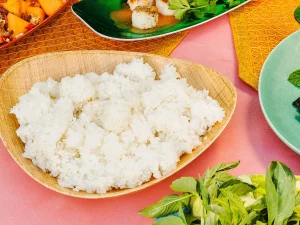
Khao Niao: The Heartbeat of Lao Cuisine

magiccarouselsundays.com – Khao Niao, or sticky rice, is more than just a staple food in Laos; it’s an integral part of Laotian culture and identity. This glutinous rice, with its unique texture and versatility, has been nourishing the Lao people for centuries. Let’s delve into the world of Khao Niao and explore its significance in Laotian cuisine.   

A Cultural Staple

The Lao people often refer to themselves as “Luk Khao Niao,” or “Children of Sticky Rice,” highlighting the profound connection between the grain and their identity. Khao Niao is not merely a food; it’s a symbol of unity, community, and shared experiences.   

Preparation and Consumption

Preparing Khao Niao is a meticulous process. The rice grains are soaked overnight, then steamed in a bamboo basket over a heat source. The result is a soft, sticky, and fragrant rice that is typically served warm.   

Khao Niao is traditionally eaten with the hands. Diners form small balls of rice and use them to scoop up various dishes, such as:

  • Laap: A spicy minced meat salad.
  • Saam: Grilled meats, often marinated in flavorful sauces
  • Tam Mak Hoong: A spicy papaya salad.
  • Nam Prik: Various chili dips.

Beyond the Plate

Khao Niao’s role extends beyond the dining table. It’s an essential ingredient in many Laotian desserts, such as:   

  • Khao Niao Mamuang: Sticky rice with mango, a popular dessert enjoyed during the mango season.
  • Khao Niao Sangkhaya: Sticky rice with a sweet, creamy custard.

A Symbol of Laotian Hospitality

Sharing a meal of Khao Niao is a significant social ritual in Laos. It’s a way to connect with others, build relationships, and express gratitude. When visitors are welcomed into a Lao home, they are often offered Khao Niao as a sign of hospitality and respect.

Conclusion

Khao Niao is more than just a food; it’s a cultural touchstone that binds the Lao people together. Its versatility, simplicity, and deep-rooted significance make it an enduring symbol of Laotian heritage. Whether enjoyed as a simple snack or a part of a festive feast, Khao Niao continues to nourish and delight the Lao people and those who appreciate the rich flavors of Laotian cuisine.

Laos’ Economy: Agriculture, Industry, and Tourism

magiccarouselsundays.com – Laos, a landlocked nation in Southeast Asia, has an economy that is rapidly evolving. While traditionally reliant on agriculture, the country is diversifying its economic activities to include industry and tourism. This article delves into the key sectors shaping Laos’ economy, examining their development and impact on the nation’s growth.

Agriculture: The Backbone of the Economy

Agriculture remains a critical component of Laos’ economy, employing a significant portion of the population. The fertile plains along the Mekong River provide ideal conditions for rice cultivation, which is the staple crop. In addition to rice, farmers grow maize, coffee, sugarcane, and various fruits and vegetables. The government is investing in agricultural modernization and irrigation projects to increase productivity and reduce rural poverty.

Industry: A Growing Sector

The industrial sector in Laos is expanding, driven by foreign investment and the development of special economic zones. Hydropower is a major contributor, with the country leveraging its abundant water resources to generate electricity for both domestic use and export to neighboring countries. The mining industry, particularly the extraction of copper and gold, also plays a vital role. Additionally, garment manufacturing and food processing are emerging industries that provide employment and contribute to export revenues.

Tourism: An Emerging Economic Driver

Tourism is becoming an increasingly important part of Laos’ economy, attracting visitors with its rich cultural heritage and natural beauty. The government is actively promoting Laos as a tourist destination, focusing on sustainable and eco-friendly tourism practices. Popular attractions include the ancient city of Luang Prabang, the Plain of Jars, and the scenic landscapes of Vang Vieng. The tourism sector not only generates foreign exchange but also stimulates local businesses and creates jobs.

Challenges and Opportunities

While Laos’ economy is growing, it faces several challenges. Infrastructure development is needed to support industrial growth and improve connectivity. Additionally, the country must address issues related to land use and environmental sustainability, particularly in the context of hydropower and mining projects. However, with strategic planning and investment, Laos has the potential to harness its natural resources and enhance its economic prospects.

Conclusion

Laos’ economy is a fascinating blend of traditional agriculture and modern industry and tourism. As the country continues to develop, these sectors will play critical roles in shaping its future. By balancing growth with sustainability, Laos can achieve economic resilience and improve the quality of life for its people.